
Rochester’s Quiet Advantage: Why One of America’s Oldest Menswear Cities Still Matters

ROCHESTER, N.Y. — In an era when most clothing worn in the United States is produced overseas, Rochester stands apart. Once known globally as a center of precision optics and imaging, the city also holds a lesser-known but increasingly rare distinction: it remains one of the last U.S. cities with the infrastructure, labor force, and institutional knowledge to produce men’s clothing.
While the modern fashion conversation often centers on New York, Los Angeles, or Paris, Rochester’s influence has been built quietly over more than a century through tailoring, manufacturing, and a workforce trained in skills that have largely disappeared elsewhere in the country.
That legacy still operates today, even as the global men’s fashion industry undergoes rapid structural change.
A Global Industry, A Local Footprint
The global menswear market is valued at more than $600 billion annually and is projected to approach or exceed $1 trillion over the next decade, according to multiple market research firms. Growth is being driven by e-commerce, the continued casualization of dress codes, the rise of athleisure, and renewed consumer interest in quality, fit, and durability.
At the same time, the United States produces only a small fraction of the clothing it consumes. Employment in domestic apparel manufacturing has declined by more than 80 percent since the 1990s, according to federal labor data, as production shifted overseas in search of lower costs.
Against that backdrop, Rochester’s continued role in men’s clothing production is not just unusual, it is economically significant.
The Tailoring Capital You’ve Probably Never Heard Of

Rochester earned national prominence in menswear long before fashion became a globalized industry. By the early 20th century, the city was widely recognized as a center of men’s tailored clothing, producing suits and sport coats for American consumers at scale. That reputation was cemented by companies like Hickey Freeman, founded in Rochester in 1899, which grew into one of the most respected names in luxury American suiting. Unlike many competitors, Hickey Freeman maintained domestic production, relying on highly skilled tailors trained in traditional garment construction.
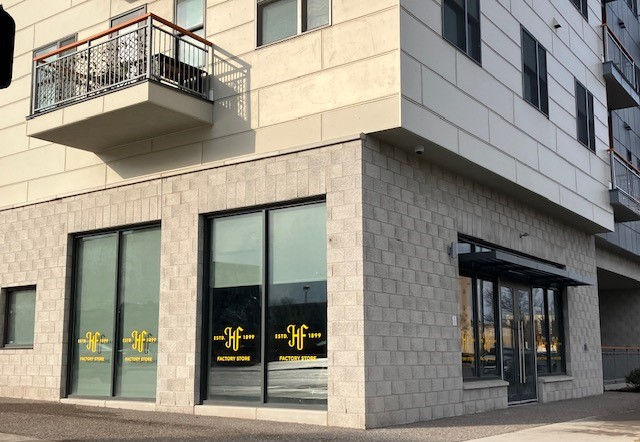
Today, that expertise lives on through Rochester Tailored Clothing (RTC), one of the last remaining large-scale tailored clothing manufacturers in the United States. RTC continues to produce high-end men’s garments domestically, supporting legacy brands and select private-label clients.
Very few U.S. cities still possess the combination of skilled garment workers, industrial tailoring facilities, pattern-making expertise, and supply-chain coordination required to manufacture tailored clothing. Rochester is one of them.
The Brands and Businesses Carrying the Torch Today
Rochester’s modern men’s fashion presence is not defined by trend cycles or national marketing campaigns. Instead, it is sustained by a compact but unusually complete ecosystem of manufacturing, retail, and artisan tailoring a combination that has largely disappeared in most American cities.

At the retail level, Adrian Jules, founded in Rochester in 1963, continues to operate as one of the region’s primary men’s specialty clothiers. The store offers high-end ready-to-wear menswear alongside made-to-measure suits, sport coats, and formalwear. While not a bespoke tailoring house, Adrian Jules plays a key role in connecting Rochester’s tailoring heritage to today’s consumer, serving executives, professionals, and event-driven clients seeking quality and fit without leaving the region.
That client-facing layer is reinforced by Hickey Freeman, whose luxury made-to-measure and custom programs remain tied to Rochester’s tailoring workforce and facilities. Though ownership and global distribution have evolved, the brand’s continued reliance on Rochester-based expertise underscores the city’s enduring relevance in high-end men’s clothing.
At the artisan level, Thimble Tailor represents one of the few examples of true bespoke men’s tailoring operating locally. Unlike made-to-measure programs, bespoke tailoring involves drafting an individual paper pattern for each client, multiple fittings, and extensive hand construction. The presence of true bespoke work in Rochester reflects the survival of a level of garment skill that has largely vanished elsewhere in the United States.
Behind these consumer-facing businesses sits Rochester Tailored Clothing, anchoring the city’s production infrastructure and enabling the full lifecycle of men’s clothing—from manufacturing to fitting to long-term care.
Together, these operators form a rare, layered system:
Manufacturing and production through Rochester Tailored Clothing
Luxury and made-to-measure menswear through Hickey Freeman
Independent menswear retail through Adrian Jules
True bespoke tailoring through Thimble Tailor
In most cities, these functions exist separately or not at all. In Rochester, they continue to coexist.
Why Manufacturing Still Matters to the Regional Economy
The continued presence of apparel production in Rochester carries implications beyond fashion. Manufacturing jobs, particularly those tied to skilled trades, tend to generate higher economic multipliers than retail-only roles, supporting local tax bases, workforce development, and supply-chain resilience.
In Rochester’s case, men’s clothing manufacturing reinforces the city’s broader identity as a place where precision work still matters an ethos shared with its historic strengths in optics, imaging, and advanced manufacturing.
Economic development researchers increasingly point to these niche capabilities as competitive advantages for mid-sized cities seeking durable, differentiated growth.
A Counterpoint to the Industry’s Global Shift
Nationally, men’s fashion has shifted toward casual and performance-driven apparel, with global brands dominating production and distribution. Yet even as tailored clothing represents a smaller share of total menswear sales, demand for quality, fit, and longevity remains steady, particularly among professionals and special-occasion buyers.
Rochester’s tailoring infrastructure positions the region to serve that premium segment in ways few U.S. cities still can.
While it is unlikely Rochester will return to mass-scale apparel production, its role as a specialized domestic manufacturing and tailoring center aligns with broader trends favoring smaller-batch, higher-quality goods and more resilient supply chains.
Looking Forward
Rochester’s men’s fashion story is not about nostalgia. It is about relevance. As brands reassess global supply chains, consumers seek durability over disposability, and policymakers emphasize domestic production, cities with existing manufacturing and tailoring infrastructure stand to benefit. Rochester’s continued ability to produce, tailor, and maintain men’s clothing rather than simply retail it sets it apart.
In a global industry defined by outsourcing, Rochester remains one of the places where men’s clothing is still made. Quietly. Precisely. And with economic significance that extends well beyond the garment itself.
Connected Know covers Rochester’s startup, technology, and innovation economy. Follow us for local business news that matters.


Comments