Kodak's Comeback: How a Rochester Icon Is Restructuring, Recovering and Reinventing Itself
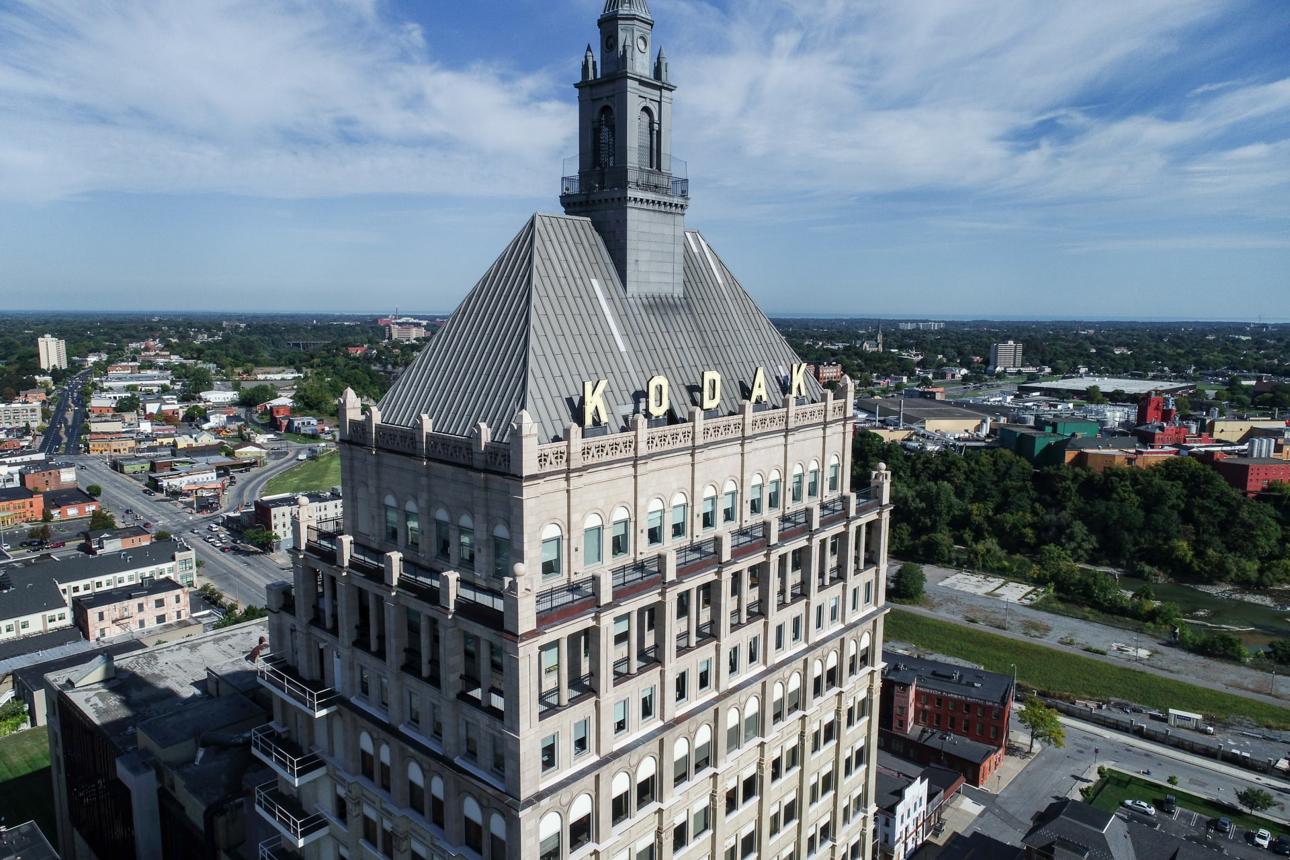 ROCHESTER, N.Y. — Eastman Kodak, a company that helped define Rochester's industrial economy, is showing signs of a financial and operational recovery after years of restructuring, debt reduction and investment in new manufacturing opportunities. The results are becoming measurable.
In the second quarter of 2026, Kodak reported revenue of $311 million, an 18% increase from $263 million a year earlier. Gross profit climbed 61% to $82 million, while the company recorded $17 million in net income, reversing a $26 million loss in the same quarter of 2025.
Operational EBITDA, a measure of earnings before interest, taxes, depreciation and amortization adjusted for certain items, increased from $9 million to $36 million. It marked Kodak's fourth consecutive quarter of year-over-year improvement in revenue, gross profit and Operational EBITDA, according to its second-quarter earnings report.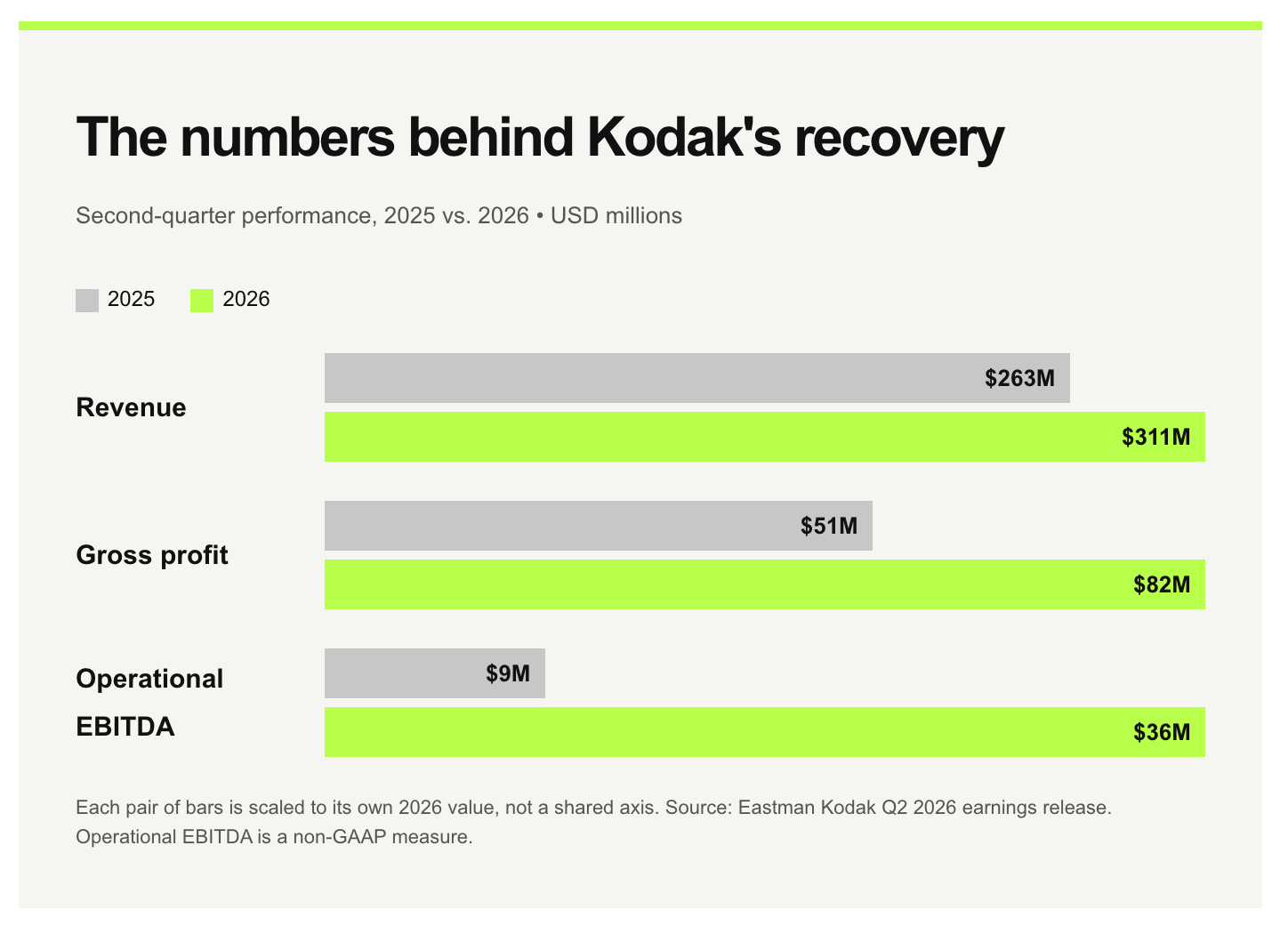 For a company that filed for bankruptcy protection in 2012 and spent much of the following decade rebuilding, the results represent meaningful progress. They also illustrate three business concepts that are often confused: restructuring, turnaround and transformation.
What is a corporate restructuring?
A corporate restructuring occurs when a company changes how it is organized, financed or operated to improve efficiency, reduce financial pressure or position itself for future growth.Restructuring can include reducing debt, selling business units, consolidating operations, eliminating positions or changing how capital is allocated. It does not necessarily mean a company is failing. Healthy businesses also restructure to become more competitive.
For Kodak, one of the most significant changes came in late 2025, when the company completed the termination and settlement of its legacy U.S. pension plan. The transaction released approximately $1.023 billion in excess pension assets after the plan's obligations were settled. Of that amount, approximately $256 million was directed to fund a replacement retirement plan, while approximately $767 million reverted to Kodak.
The company used approximately $312 million to repay term loans, reducing the outstanding balance to $200 million by December 2025. Kodak made additional principal payments totaling approximately $100 million during the first half of 2026. The restructuring substantially reduced Kodak's debt obligations and interest expenses, freeing up financial resources for other priorities.
According to the company's 2025 annual report, Kodak also eliminated approximately 280 positions globally during 2025, including manufacturing, service, administrative and research and development roles. Those reductions resulted in $21 million in restructuring charges. Kodak expects the actions to generate approximately $23 million in annual cash savings once substantially implemented by the end of 2026.
The workforce reductions illustrate an important reality: Corporate restructuring can strengthen a company's financial position while creating difficult consequences for employees and communities.
What makes a turnaround different?
While restructuring describes the changes a company makes, a turnaround describes the recovery it is trying to achieve.
A business turnaround occurs when a company reverses declining performance and restores financial and operational stability. Success is generally measured through sustained profitability, stronger cash flow, revenue growth and reduced financial risk.
Kodak's latest financial results suggest that its restructuring efforts are beginning to translate into improved operating performance.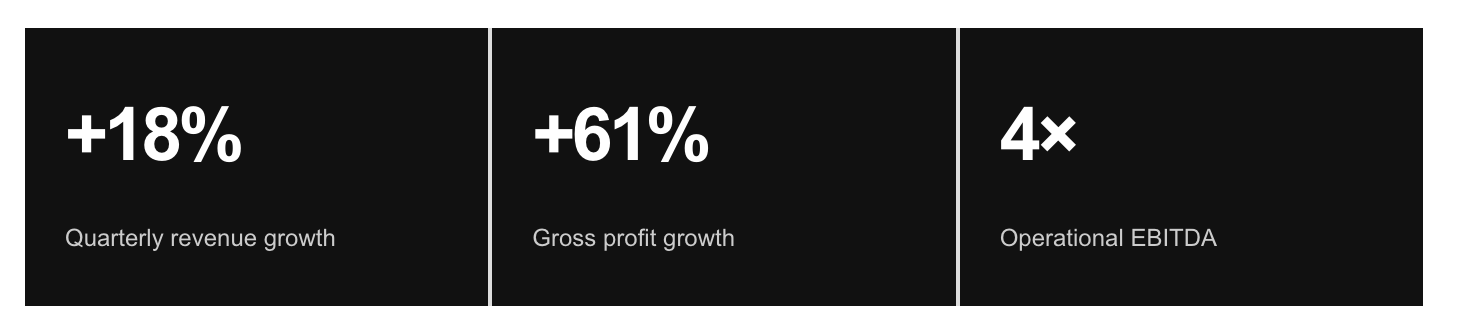 The improvement is not solely the result of financial restructuring. Kodak attributed its stronger operating earnings to increased sales volume and improved pricing, partially offset by higher commodity and administrative costs.
Its commercial printing business generated $195 million in second-quarter revenue, up 10% year over year. Advanced Materials & Chemicals revenue increased 40% to $105 million. The results are encouraging, but a successful turnaround requires more than several strong quarters. Kodak must demonstrate that it can consistently generate cash, maintain profitability and compete in its core markets.
Rochester has seen a successful turnaround before
Kodak is not the first Rochester company to undergo a major corporate recovery. Genesee Brewing provides a notable example. In 2009, private equity firm KPS Capital Partners acquired High Falls Brewing and established North American Breweries, beginning a restructuring and investment program that helped revive the historic Rochester brewery. The company modernized operations, expanded distribution and increased production. Brewery employment grew substantially, and production approximately doubled over the following years.
In 2012, KPS sold North American Breweries to Cervecería Costa Rica, part of FIFCO, for approximately $388 million. The sale marked a successful exit following the brewery's operational recovery. Genesee's experience demonstrates what a completed turnaround can look like: financial investment, improved operations, business growth and a measurable outcome.
Kodak's recovery remains in progress, but its recent financial performance suggests that its efforts are producing results.
Transformation: Building the next version of a company
A transformation goes beyond repairing financial performance or reorganizing operations. Business transformation involves fundamentally changing how a company creates value, whether through new products, technologies, markets or business models.
Kodak offers an example of how restructuring, turnaround and transformation can happen simultaneously.
Although the company remains a major supplier of commercial printing technology and photographic film, it is increasingly applying its expertise in chemistry, precision coating and materials science to new industries.
At Rochester's Eastman Business Park, Kodak has invested in pharmaceutical manufacturing capabilities, including a facility designed to meet current Good Manufacturing Practice standards. The company is also exploring battery-related manufacturing applications that use precision coating technology originally developed for photographic film.
These initiatives represent a different strategic objective from debt reduction or cost cutting. Rather than simply improving its existing business, Kodak is attempting to create new sources of revenue from capabilities developed over decades of industrial manufacturing. The distinction is important because these emerging businesses are not yet proven growth engines. Pharmaceutical manufacturing, in particular, remains a longer-term commercialization opportunity.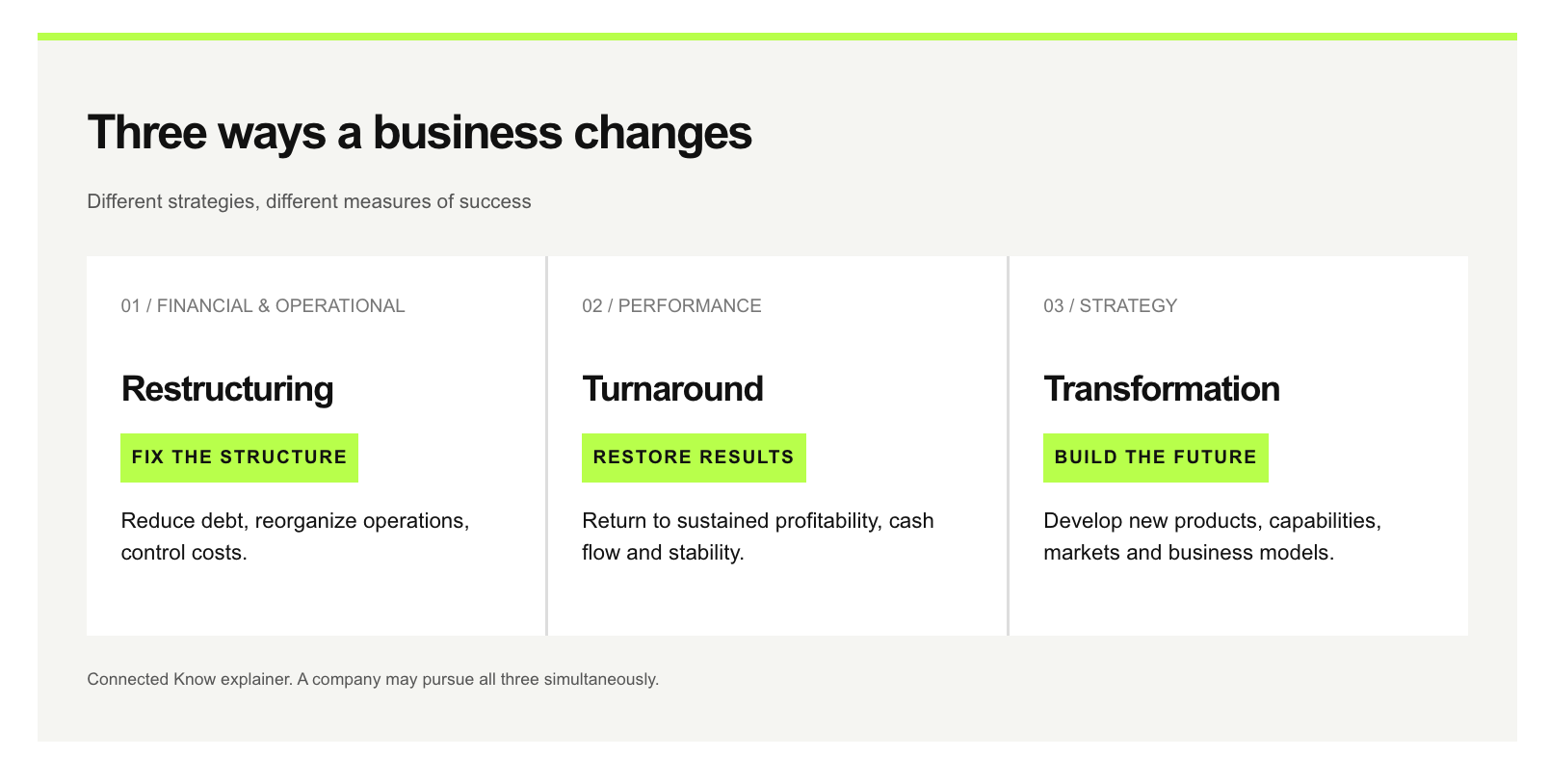
Different approaches across Rochester's business community
Other companies with Rochester roots demonstrate how restructuring and transformation can take different forms. Bausch + Lomb, founded in Rochester in 1853, became a separately publicly traded company in 2022 as part of its separation from Bausch Health.
The company has pursued growth through acquisitions, product development and investments across its eye-care businesses. Its evolution is more accurately described as a corporate transformation than a traditional turnaround from financial distress.
Constellation Brands, headquartered in Rochester, provides another example. The beverage company has been restructuring its portfolio, divesting mainstream wine brands and focusing on higher-margin products. In 2025, it announced an enterprise-wide restructuring initiative targeting more than $200 million in annualized cost savings by fiscal 2028. Its strategy demonstrates that restructuring can be proactive, even when a company is not facing the type of financial distress historically associated with a turnaround.
The three concepts serve different purposes:
- Restructuring changes how a company is organized, financed or operated.
- Turnaround restores a struggling company's financial and operational performance.
- Transformation changes how a company competes and creates value over the long term.
A company can pursue all three, but completing one does not guarantee success in the others.
What comes next for Kodak?
For Kodak, the next phase will be measured by its ability to turn improved financial performance into sustained growth. The company ended the second quarter with $290 million in cash, despite significant debt repayments during the first half of 2026. Its improved balance sheet provides greater flexibility to invest in research, product development and manufacturing infrastructure.
The company's Advanced Materials & Chemicals segment is particularly important to watch. Its 40% second-quarter revenue growth suggests expanding demand for businesses that extend beyond Kodak's traditional commercial printing operations. Still, higher revenue and improved earnings do not automatically guarantee long-term success. Kodak faces competition, changing market demand, commodity price pressures and the challenge of commercializing new technologies.
For Rochester, the implications extend beyond the company's financial statements. Kodak's ability to sustain its recovery, invest in local manufacturing and create new business opportunities could influence the region's industrial economy for years to come. The company's recent results suggest that restructuring has helped establish a stronger financial foundation and that its operational turnaround is gaining momentum.
Whether its transformation into a more diversified advanced manufacturing company succeeds will be determined by what comes next. For now, Kodak is demonstrating that even one of Rochester's most established companies can find new opportunities by rethinking how it operates, where it invests and what it can become.